
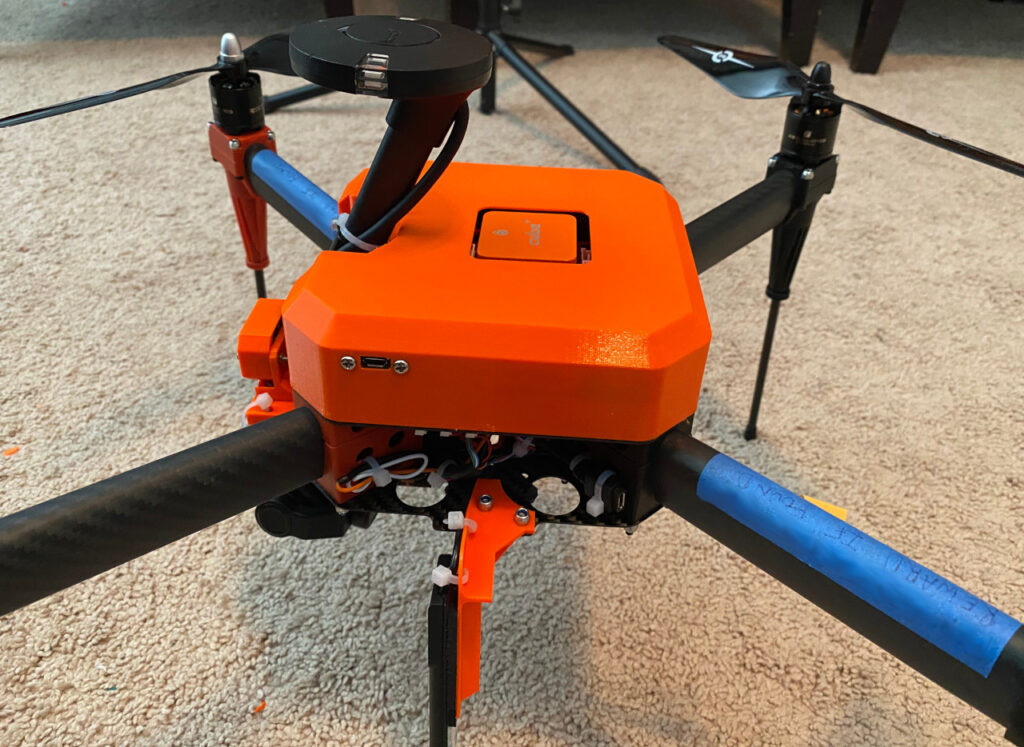
In recent years, small multirotor drones have become increasingly prevalent, revolutionizing various industries and transforming the way we interact with the world. These unmanned aerial vehicles (UAVs) are not only popular among hobbyists but have also found significant applications in fields such as aerial photography, surveillance, agriculture, search and rescue operations, and even package delivery. The science behind these tiny flying machines is both intriguing and complex, combining principles from various disciplines to achieve flight stability, control, and maneuverability.
1. Aerodynamics:
At the heart of every multirotor drone’s flight lies the fundamental principles of aerodynamics. Multirotor drones typically come in two configurations: quadcopters with four rotors and hexacopters/octocopters with six or eight rotors. Each rotor consists of a propeller, which generates lift by creating a difference in air pressure between the top and bottom surfaces as it spins.
To ascend, the rotors generate enough lift to overcome the force of gravity. This is achieved by adjusting the rotational speed of the propellers, and the drones rely on their onboard flight controllers to automatically adjust these speeds for stable flight.
2. Flight Control:
The flight controller is a crucial component that serves as the drone’s brain, orchestrating its movements. It receives data from various sensors like accelerometers, gyroscopes, and barometers, providing real-time information on the drone’s orientation, altitude, and velocity. The flight controller processes this data and adjusts the speed of each rotor accordingly to maintain stability and maneuverability.
3. Gyroscopes and Accelerometers:
Gyroscopes and accelerometers play pivotal roles in keeping the drone stable during flight. Gyroscopes detect angular velocity, measuring how fast the drone is rotating around its various axes (roll, pitch, and yaw). Accelerometers, on the other hand, measure the drone’s acceleration along these axes.
The flight controller uses this data to make continuous adjustments, ensuring that the drone remains level and under control. For instance, if the drone tilts forward (pitch) due to wind or user input, the flight controller will compensate by increasing the speed of the rotors at the rear to bring it back to a level position.
4. GPS Technology:
Many modern multirotor drones are equipped with GPS technology, which provides accurate position data. GPS enables features like waypoint navigation, return-to-home functionality, and geofencing. Waypoint navigation allows the drone to follow a pre-programmed path, while return-to-home ensures that the drone can autonomously return to its take-off point if it loses connection or encounters low battery levels.
5. Battery Technology:
The advent of lightweight, high-capacity lithium-polymer (Li-Po) batteries has significantly impacted the drone industry. These batteries provide the necessary energy to power the motors and electronics for extended flight durations. However, battery life remains a challenge, as increased flight time requires a delicate balance between weight, power consumption, and drone size.
6. Remote Control and Autonomy:
Traditionally, drones were piloted through remote control, much like a radio-controlled aircraft. However, advancements in artificial intelligence and machine learning have paved the way for autonomous drones. Autonomous drones can use computer vision to detect and avoid obstacles, follow subjects, and perform complex tasks without direct human intervention.
Conclusion:
Small multirotor drones exemplify the remarkable fusion of science, technology, and engineering. By harnessing the principles of aerodynamics, flight control, sensor technology, and more, these UAVs have become versatile tools with applications in various domains. As advancements continue, we can expect even more sophisticated and capable drones to emerge, revolutionizing industries and shaping the future of aerial exploration and beyond. However, it’s crucial to strike a balance between innovation and responsible drone usage to ensure safety, privacy, and the sustainability of this transformative technology.
