Notes · Craft
Why I Build Guitars Instead of Just Buying Them
On choosing the difficult version of something you love — and what it teaches you that the easy version never could.
I’m not sure I’ll ever reach a point where I feel I have too many guitars, but finding space for all the cases and parts has been a concern for my wife for years. I love the variety, the history, and the quirks. When I look through the soundhole of an acoustic guitar, I think of the model boats my grandparents used to display — all that meticulous craftsmanship in a space most people never see. I grew up watching my father work wood into furniture and living spaces, and somewhere in those memories lives the reason I build them. The challenge drew me in.
Patience Builds
Building these guitars takes time and therefore achieving good results requires a good bit of patience. It’s not just about the glue; it’s about the patience you need to have with yourself. You work for days or weeks only to have to pull it back apart and do it all again. Sometimes you spend more time sharpening your tools or building jigs and fixtures, but these tasks are the essence of what leads to good results despite feeling like obstacles to progress. Getting the shape just right is both a process of careful measurement and painstaking handwork. Haste, often facilitated by power tools, leads to the quickest mistakes. Once you know the correct size for a given piece or have the right marks transferred from a plan, bringing your unique guitar to the right place and time may require everything from hand planes to rubber bands. You start out looking forward to big milestones like closing up the body or carving the neck, but you wind up celebrating tiny details like the way the binding seats in its channel or the inlay for the rosette fits in its slot. I’ll never forget the feeling of my first inlay coming to life, a triumph over hours of cramps and doubt. You begin with a rough-sawn piece of spruce, vaguely guitar-shaped, that already sings with potential when you tap it, and you end up wondering if the biggest product is a love for the work and not the instrument itself. Finding appreciation for each small victory is why I love doing the work in the first place.
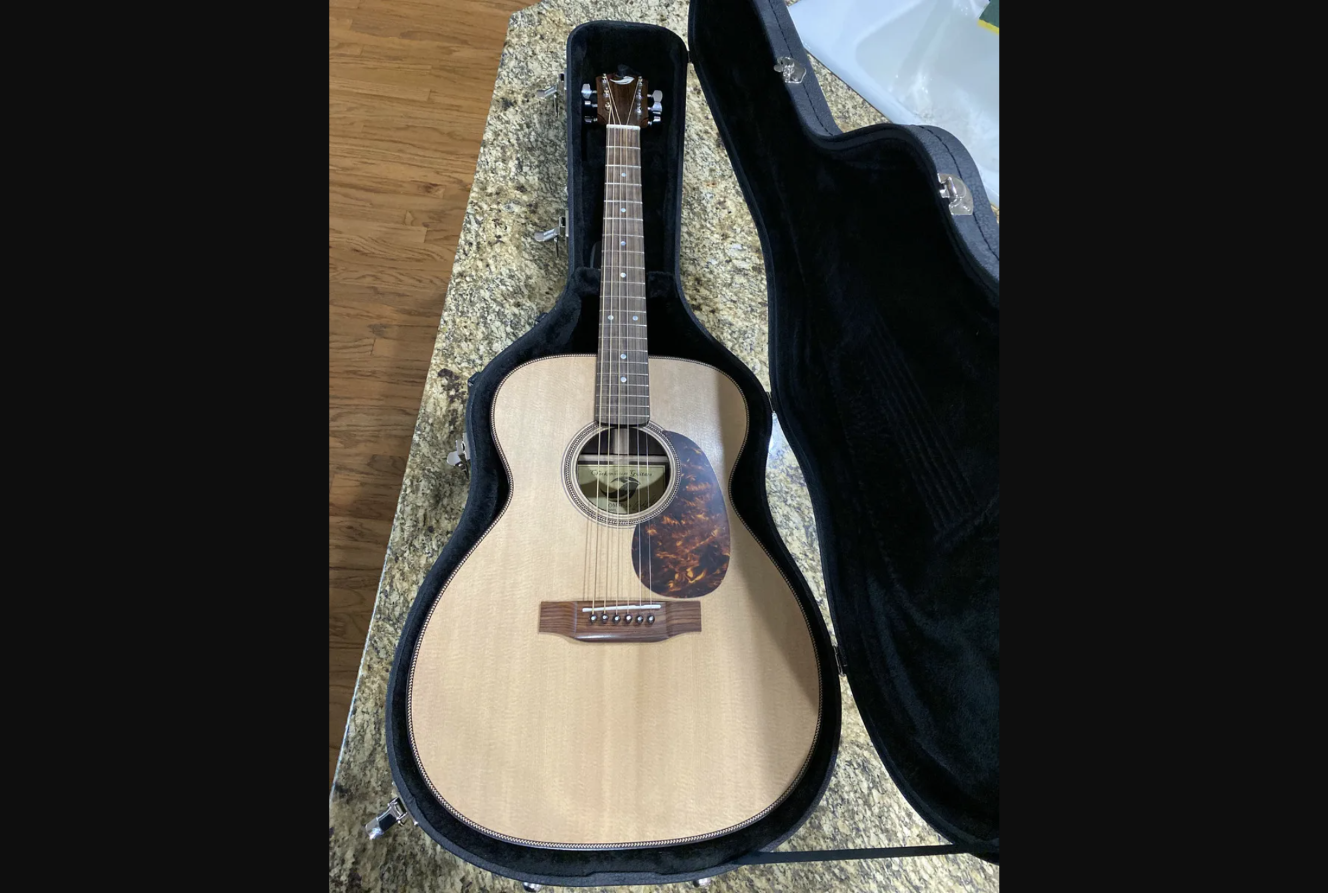
My third build is the one I’m most proud of. I tried something new with it, a side soundport, and the effect was remarkable: the instrument’s voice projects directly to me when I play it, as if I were standing in front of it. I put a Chickenhouse Guitars logo inlay in the headstock which was also a first. It plays well and sounds quite nice. But what I remember most is the moment I held the finished thing. I had shaped every curve, fitted every joint. The music it made felt like something I had grown rather than built.
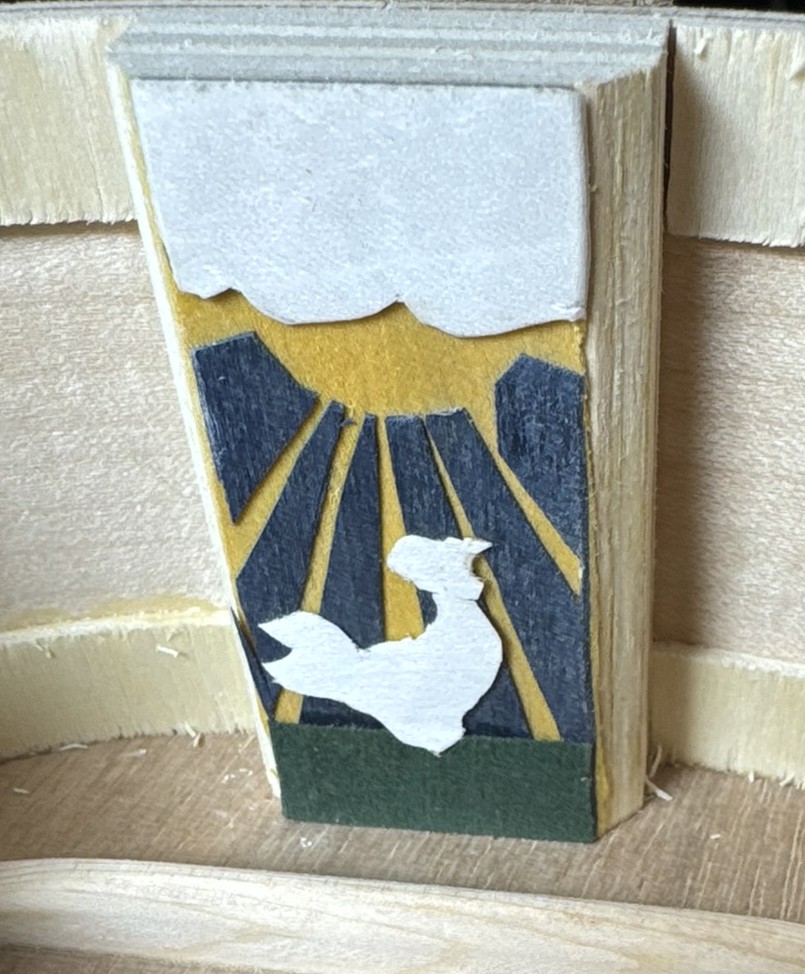
Every project has its rewards. I had great fun putting together Oakley’s Ukulele. I added a custom scene created from dyed wood veneers, a chicken singing in front of a sunrise, to the neck block inside the body. You would have to look closely to find it, but I hope some day my great-niece looks inside and it makes her remember how much I love her.
What It Teaches You
After building these instruments, a few things became clear. It is easier to take off a little more than to add it back in. When you cut something away it is gone forever — it either requires you to start over from scratch or you change your approach and adapt. All the details of the finished product are built upon the workmanship that came before, and it begins with the decision to create.
Perhaps the most meaningful thing I learned is forgiveness. The tolerances are small — the top has to be thin enough to vibrate freely but stiff enough to hold up under decades of string tension, and the bracing underneath must be placed and shaped to balance strength with tonal clarity. None of it is forgiving in a technical sense. And yet mistakes are not the same thing as failures. When something goes wrong, the wood does not hold it against you. It offers a path forward instead. If you listen from the very beginning, the guitar will tell you what it needs. The raw materials that grew in sunlight and rain still know how to sway and speak. You forgive each other, and you move forward. That is something I have carried out of the shop and into the rest of my life.
Building something this demanding changes how you listen. I hear guitars differently now.
I have no idea what build four will be. Something harder, probably.
Carlton D. Houston is a Senior Infrastructure & Security Leader based in Roswell, GA. This is his personal site — a place to write things down when they seem worth writing.